Saturday, May 2, 2015

Reacting to Baltimore: Sweeping Generalizations VS.. Sweeping Degeneralizations

Once again, I’ve noticed a trend in white commentary on Baltimore. And I know people are growing weary of discussing the issue. But it’s still an issue worth discussing, so discussion isn’t about to stop.  And thus, I’d like to respectfully address the following argument:

“Not all black people are thugs. Not all police officers are bad. Not all white people are racist.”

Although totally true, statements like these are not useful at best and harmful at worst.

In my experience, this sentiment can be translated in a couple of ways: “let’s just stop talking about it” or “I’m frightened by the demonization of the police, but I swear I’m not racist!” Either way, and no matter how well intentioned, it is used to shut down a very important conversation that is worth having.

You see, I completely agree that sweeping generalizations are harmful. Stereotyping all blacks as thugs is obviously harmful to black people and black communities. Stereotyping all whites as racist is unfair and distances those who are sympathetic toward the plight of their darker-skinned neighbors. And stereotyping all police officers as violent bullies paints good, integrity-filled men and women in a negative light which they never earned and diminishes the respect which they did.

But here’s the thing...sweeping degeneralizations (yes, I know that’s not technically a word) are also harmful. As I said before, they can only hinder a discourse that needs to take place no matter how messy it may get.

No, not all black people are thugs. But if someone is being treated unfairly-even killed-because of that stereotype, we need to seek justice for them and their families. And, accordingly, we need to investigate the police involved in said situation. Not only should they face a just punishment, but they should be removed from the police force so as to no longer taint the relationship of the police force with the people who rely upon them. And even though we all would like to see ourselves as free from the Scarlet Letter of racism...I’m pretty sure every last person on the planet is at least a little bit racist. It’s hard to escape unintentional stereotyping of others based on how they look or where they’re from. That’s why we all need to be willing to question our own perceptions and motives. Because racism doesn’t consist simply of the “big things” like slavery or segregation. Indeed, racism is so dangerous because it can be so subtle. 


In conclusion, I would like to congratulate Baltimore concerning chief prosecutor Mosby’s decision to charge the officers involved in the murder of Freddie Gray. Hopefully this is just one of many steps towards a freer, more equal America in which those who would abuse their power are no longer allowed to harm those over whom they wield it and no longer allowed to slander the names of others who hold that same power with more noble hands.

Wednesday, April 29, 2015

Reacting to Baltimore: Do You Really Need a Pretty Please?

In the discussion of Baltimore, and in the general issue of police violence towards blacks, I’m hearing a lot of similar comments from white friends and acquaintances. 

Of course, there are always those who are simply determined to not question the integrity of the police, especially against the word of urban blacks.

However, there are others who are willing to concede to the at least possible extremity of police responses in at least certain situations. And yet of all the players in this issue, the angry rioters always seem to steal the attention. I hear comments such as, “but still, there is no excuse for lawlessness” and “if you want the cops to be more nice to you, why would you burn down your own town?”

And to these questions, and with present restraint from addressing other facets of the situation, I would like to make this simple point:

As a member of the human race, my responsibility to consider the concerns of others is not contingent upon how they appeal for that consideration. My charge to acknowledge the suffering of others is not dependent upon the way in which they make me aware of that suffering. My inherent duty to face the problems interwoven into the very fabric of my homeland does not change according to how others have chosen to face those problems.

Closing my eyes to what’s in front of me because I don’t understand it does not excuse me from being a witness and closing my ears to a shouting voice because I wish it were whispering does not change the content of its words.


Whether by action or inaction, we are all writing the pages of our children and grandchildren’s history books. Consider carefully what part you’re playing.

Friday, April 24, 2015

#fieldtechlife


So for the past month or so, I did some cultural resource management work (CRM). When I land one of these temporary gigs it means I get paid to do "archaeology."

It's not what you think.

We were doing Phase I work in the Kisatchie National Forest of Louisiana. Phase I means we aren't going in because we know there is an archaeological site there. It means we're going in just to see if there is. And usually....there isn't.

But hey, there is still a bit of adventure in it. I've braved everything from thorn bushes to creepy hotel life! To give you an idea of what it's like, Here is a random assortment of moments from my work in Kisatchie, complete with pictures!


Wednesday, March 25th, 6:45am: I make my sleepy way to the breakfast area of the Econolodge in El Dorado, Arkansas. There's really nothing "continental" about this breakfast. Not finding any fruit, I grab a couple of those little muffins with the carcinogenic fake blueberry bits. We're supposed to meet at 7:00, but no one else from my crew is down here yet...just some construction worker dudes who are used to being in hotels filled completely with other construction worker dudes.

I think I'll just enjoy my fake blueberry bits alone in my room.

Saturday, March 28th, 7:30am: On the drive through the forest to the parcel that we're working on, we see a lot of trucks parked along the roadsides. On a hunch, our crew chief googles something...

Turns out turkey hunting season starts today. Each of those trucks corresponds to a turkey hunter out in the woods that we are supposed to be surveying. How did the company not find this out BEFORE starting the project??

Wednesday, March 29th, 1:00pm: In an effort to get us away from the hunters, the company has moved us to another parcel. And it's a swamp.

Like, seriously, this area has to be underwater for a good part of the year.

We spread out fifty meters apart and walk along parallel lines through the forest. We each use pink sighting flags and sighting compasses to make sure that we are staying true to our line. We are also each carrying a backpack with lunch, and paperwork, and some random small useful things, as well as a shovel in one hand and a screen in another. We lug all this equipment along all day, putting in a small shovel test every 30 or 50 meters to check for cultural material.


They're all mud. If anything or anyone has lived here EVER, the evidence is all washed away. Except for the evidence of this little guy...


Saturday, April 11th, 7:30am: On this project, we have to work ten days in a row and then get four days off. Now it's our second ten day and we're working on a different section of Kisatchie deeper into Louisiana.

We pull up to a little white church tucked into the forest. We'll be working through the woods to the back and side of the church's cemetery for the next few days. As we walk along the cemetery fence line, casually observing names and dates on nearby headstones, our crew chief comments that it may be old enough to have unmarked African American graves that got left outside of the fence. In the area we'll be working in.

But I think he's joking. I mean he is joking, right?

Sunday, April 12th, 2:00pm: One  of my fellow field techs and I are working together on a transect. The undergrowth here is intense. Too intense to back-spot to the last sighting flag after going more than a few meters. We end up crawling through tunnels of thorns on all fours at points, trying to ignore the fact that we've been warned about multiple species of venomous snakes that live here.

At one point I look back and see her struggling to get all of her equipment through a sea of undergrowth. I could help her...or I could take a picture and document her struggle for the glory of the internet.


I feel like I made the right decision.

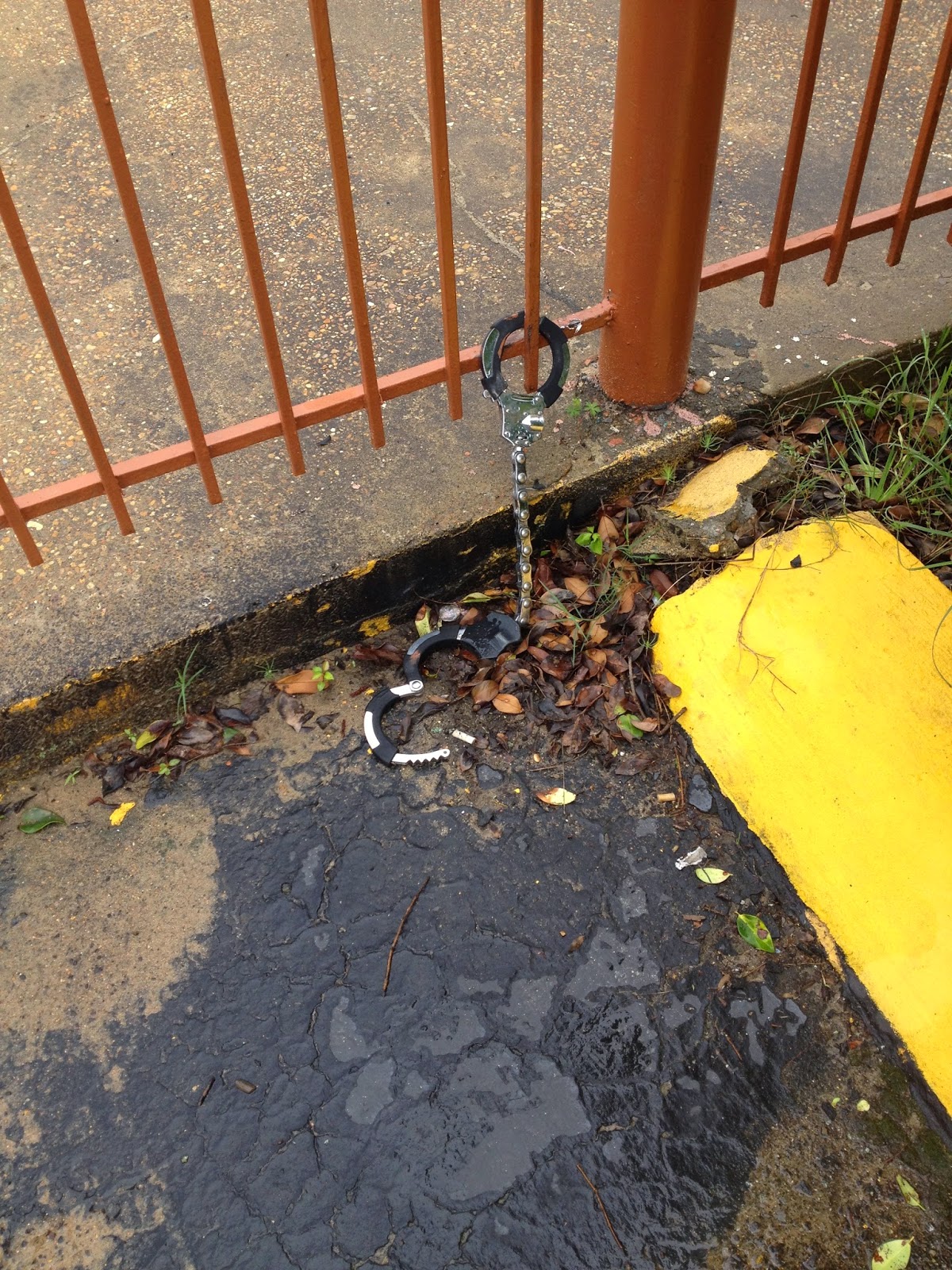
Monday, April 13th, 12:00pm: It looks like it might rain today, so we stay at the hotel and clean and sharpen shovels. This company hasn't exactly been putting us in fancy hotels, but I'm still a bit disturbed when I notice some handcuffs connected to a fence around what used to be the pool.


Like....those are not cheezy magician handcuffs. Nor are they pink and fuzzy. Those are legit handcuffs. WHY IS THIS A THING?

Wednesday, January 7, 2015

3 Dangers in Over-Glorifying Youth


“I don’t know about you, but I’m feeling twenty-twoo-ooo!”

Actually....I’m not really sure how I’m supposed to feel as a 22-year-old. Seriously, am I an adult or what?

Western society’s increasing phase of adolescence coupled with its constant glorification of youth can make for an interesting and confusing experience for the modern twenty-something. To be honest, sometimes I just want to get on with my life and be respected as an adult. To be equally honest, sometimes I just want to keep getting away with everything that young people can get away with. Isn’t there a happy medium?

I mean I’m certainly thankful that my society is no longer one that would expect me to be married and bearing children by now. However, we may have gone a little too far in the opposite direction. Here are three dangers I see in over-glorifying the frivolities of youth.

1) It can make it harder to enjoy youth.
Ironically, too much pressure to have fun while you’re young can kinda take the fun out of being young. It’s like there’s this quota that we’re supposed to fill before graduating college, starting a family or career, or otherwise joining the “adult world.” I mean, my youth hasn’t been particularly mainstream since I was homeschooled and went to a university with a relatively high percentage of non-traditional students. But still, I highly doubt I’m the only young person who has ever looked around and thought, “So...am I having enough fun yet?”

And sadly, the types of fun that are commonly depicted in the music and movies that influence our conception of youth are not the healthiest. Which leads me to my second point.

2) It can make youth more dangerous.
This is very culturally specific, I suppose, as it’s closely related to the way in which we glorify youth. Think of a few songs or movies about teens and/or twenty-somethings “living it up.” What are the common themes? How about taking advantage of one’s independence from career and family obligations to invest time and effort into a cause they care about? Nope. What about using youthful health to get outside and swim and climb and explore and just DO AWESOME STUFF??? Despite the amount of North Face you’ll see on a college campus or the number of Tinder profiles featuring the word “outdoorsy,” this doesn’t seem to come out on top, either.

Rather, it seems that most songs and movies about youth regularly hit on two themes: sex and alcohol.

Now don’t take me for more of a saint than I am. I’m not against either of these things when enjoyed in moderation. But when partying becomes the focal point of being young, young people miss out on SO much. The quality of one’s youth shouldn’t be measured according to how many times they woke up and didn’t know where they were or how attractive their hottest hook-up was. Emphasis on these things fosters a youth culture tainted with alcohol poisoning, drug overdose, sexual harassment, and a lot of self-image issues.

3) It can take away from the rest of the human experience!
I don’t really like it when people talk about high school or college or their teens or their twenties or whatever as the best time in their life. Again...I’m supposed to be having all the fun now? TOO. MUCH. PRESSURE.

But also, there are multiple things to enjoy about every phase of life. I understand that there are hard times and goods times, ups and downs...but overall, I want to live so fully in every phase of life that when I’m on my deathbed looking back over the years, I can’t even decide which part was the best.

Furthermore, I think the pressure to “live it up” and be irresponsible while you can get away with it really hinders people from contributing toward their long term goals. 

I was thinking about mine earlier today...become an archaeologist, work as a professor, contribute to education reform and found at least one university in a developing country...and it occurred to me that 22-year-old me is not the main character of my life story. We’re still in the first half hour of the movie, glancing through at the young adulthood that makes me who I need to be for the climax of the story. Of course you can always be making some kind of difference in the world around you. But for many of us, the significance of our lives will not be realized in full until our middle or later adulthood. And that means that right now, we have all this time and energy that we could either waste or use to prepare ourselves. It’s up to each of us to become the person that we want to be. It’s important to balance that fact with enjoying and appreciating the time we have while not tied down to a lot of serious commitments. Experiencing the now should not come at the cost of experiencing the later...or vice versa, mind you.

I guess the main point here is that three quarters of the “living” you do should not be done in the first quarter of your life.

Yeah, we should enjoy the good things about youth while we have them. But not just the ones that are glorified by our media, and not with a blind eye to everything else that life can be.

Friday, January 2, 2015

How to Tell if a Movie is a Dude Flick

Photo by jwblinn/iStockphoto
We all know a chick flick when we see one. The main character or characters are chicks, the main dude is some version of prince charming…etc etc.

But how do you tell if a movie is a dude flick? It’s a bit less commonly defined.

Thus, I put to you the dude flick test. If a movie meets three basic criteria, it passes as a dude flick: (1) There are no more than two women in it and  (2) they don’t talk to each other unless (3) it’s about a man.

Let’s try it out with a few of 2014’s biggest films.

~The Hobbit: The Battle of the Five Armies
Little dude, big dragon, lots of fighting. Bard has two daughters but all they do is scream and cry while the son helps save the day, leaving only the two elvish women as plot-important chicks and they don’t share scenes so PASS!

~Unbroken
A few WWII soldiers survive a plane crash and over a month drifting at sea only to be captured by the Japanese navy. I haven’t actually seen this one, but I scrolled down the complete cast list on IMBD until I got to roles as generic as “young bully” and only saw one female actress, so I think you’re safe. PASS!

~Guardians of the Galaxy
A human dude, an alien chick, an alien dude, a talking raccoon, and an animate tree save everybody from evil alien dudes. The important alien chick, Gamora, does talk to her evil sister, Nebula a few times. So it comes close, but it doesn’t quite past the dude flick test. But they’re both pretty hot in this badass alien chick way so I’m sure you’ll still enjoy it. FAIL! But barely.

~The Hunger Games: Mockingjay Part 1
Female main character who talks to her mother and sister, the female future president of Panem, and a propo director chick with really cool tattoos. Sorry boys, this one fails. But, don’t worry, it’s not like it’s female dominated. Actually if you look at the cast list you’ll notice that there’s still slightly more men in plot pertinent roles than women.

Okay. This is just a sample. But I could go on all day, and the pattern would be the same. If we use a standard for dude flicks that says there can only be one or two important female characters and they can only converse to each other about male characters, you would think that only a small fraction of mainstream movies would qualify. But that’s not the case.

As a matter of fact, I have to confess that I didn’t make up this test completely on my own. I actually adapted it from something called the Bechdel Test.

It’s just as you feared! It’s a trap! A feminist trap! Come on, you stuck with me this far. Hear me out.

The Bechdel Test is a low bar test for gauging sexism in movies. Its three criteria are the inverse of those for the dude flick test. So a film passes the Bechdel Test if it has 1) at least two women in it (2) who talk to each other (3) about something other than a man.

This is the 21st century. Age of equality. Only a few particularly dudely movies will fail. Right?

Wrong. If you go to bechdeltest.com you can see and add to a database of movie reviews saying whether or not a given movie passes. This is open for the public so both men and women can rate the films they watch (not just us pesky feminists).

You’ll notice that not only do a good portion of current movies fail, but a lot of the movies that pass only do so by the skin of their teeth. If you click on the movie title you can read people’s reviews and comments. They’re often debating about whether the few slivers of conversation between the female characters in the movie really count.

Take Guardians of the Galaxy for example. Don’t get me wrong, this is a really fun, enjoyable movie. But it fails the dude flick test and passes the Bechdel Test with just a few minutes of conversation. And it follows the same trend as lot of other super hero movies, such as the Avengers and the Fantastic Four, where there is a team of heroes and not only is there one female but her gender is one of her defining characteristics.

You’re unique because you’re a talking raccoon. You’re unique because you’re walking tree. You’re unique because you’re a hot alien chick.

This is just one example of men being implicitly presented as “standard” and women being presented as “other.”

Alright, I’ve lectured you on the Bechdel Test long enough. Before I let you go, I want go ahead and address a few responses I’ve gotten from men when bringing this is up in the past.

        Movies cater to men because men go to the movies more.
How do you know that men don’t go to the movies more because movies cater to men?

        You just started voting, what, 100 years ago? Baby steps.
Oh you’re right. The USA waited a century and a half for women’s suffrage. If we can wait that long to vote we can certainly wait for equal representation on screen. Silly me. 

SERIOUSLY?! The fact that we had to fight for a basic civil liberty does not mean that we’re obligated to wait around for equality in other areas. I mean really, why would you even say that? I just can't. Can't even.

 Come on, it’s just a movie. Stop being petty.
 It’s not just about one movie. It’s about a huge and culturally significant industry that both reflects and influences our societal values. Men, specifically white men, still dominate almost every industry. The realm of entertainment is no exception. I know you’re annoyed that you "can’t just enjoy the damn movie," but women and minorities are annoyed at constantly being belittled and relegated to roles that revolve around you. So who’s really being petty here? 

Look, I don’t expect anyone who reads this to go protest or abstain from anything related to JJ Abrams. All I ask is that you look with open eyes at gender inequality and stop belittling women who are tired of it.  If nothing else, next time you’re at the movies and your lady friend is begging you to watch some stupid chick flick instead of a “normal, everybody movie,” think twice about how you respond.